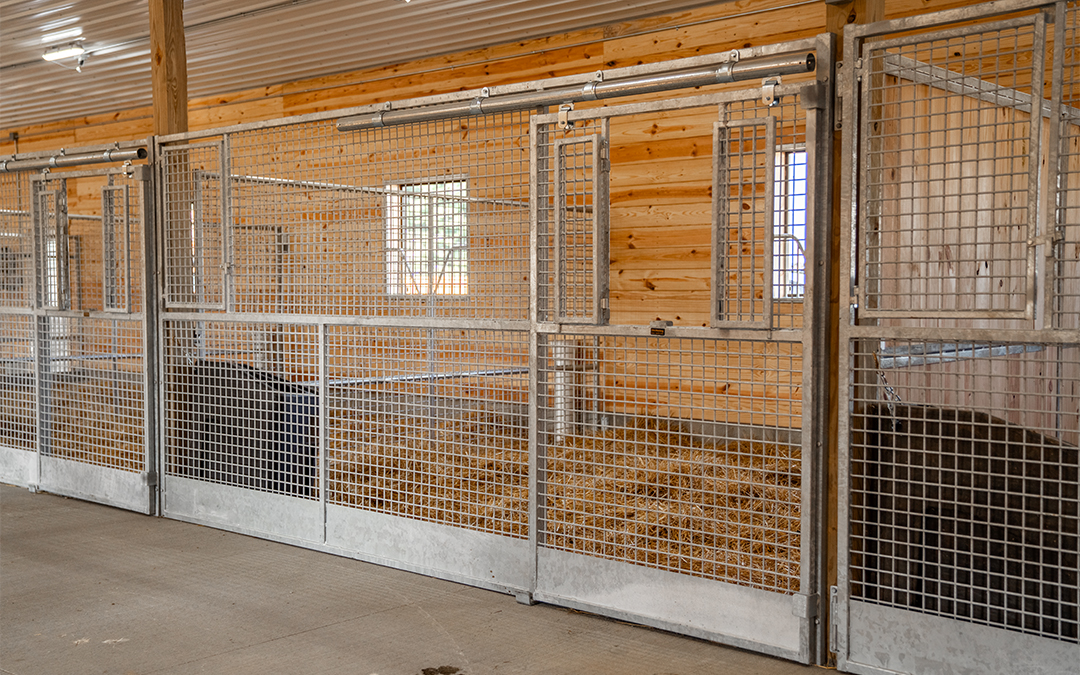
If you’ve spent any time around horses, you know they aren’t exactly gentle on their surroundings. Between the constant leaning, the occasional frustrated kick, and the sheer volume of barn moisture, your equipment is fighting for its life from day one.
You buy a gate or a feeder, it looks shiny for a month, and then the orange crust of rust starts creeping in. It’s tempting to think that metal is metal, but that’s a rookie mistake that ends up costing a fortune in replacements.
This is where we get into the nitty-gritty of the benefits of hot-dip galvanizing metal horse stalls. With them, when your gelding decides to use the hay feeder as a scratching post, he’s hitting a surface that’s chemically and physically tougher than the steel protecting it. It’s basically the difference between a feeder that lasts five years and one that outlives the horse!
What Is Hot-Dip Galvanizing?
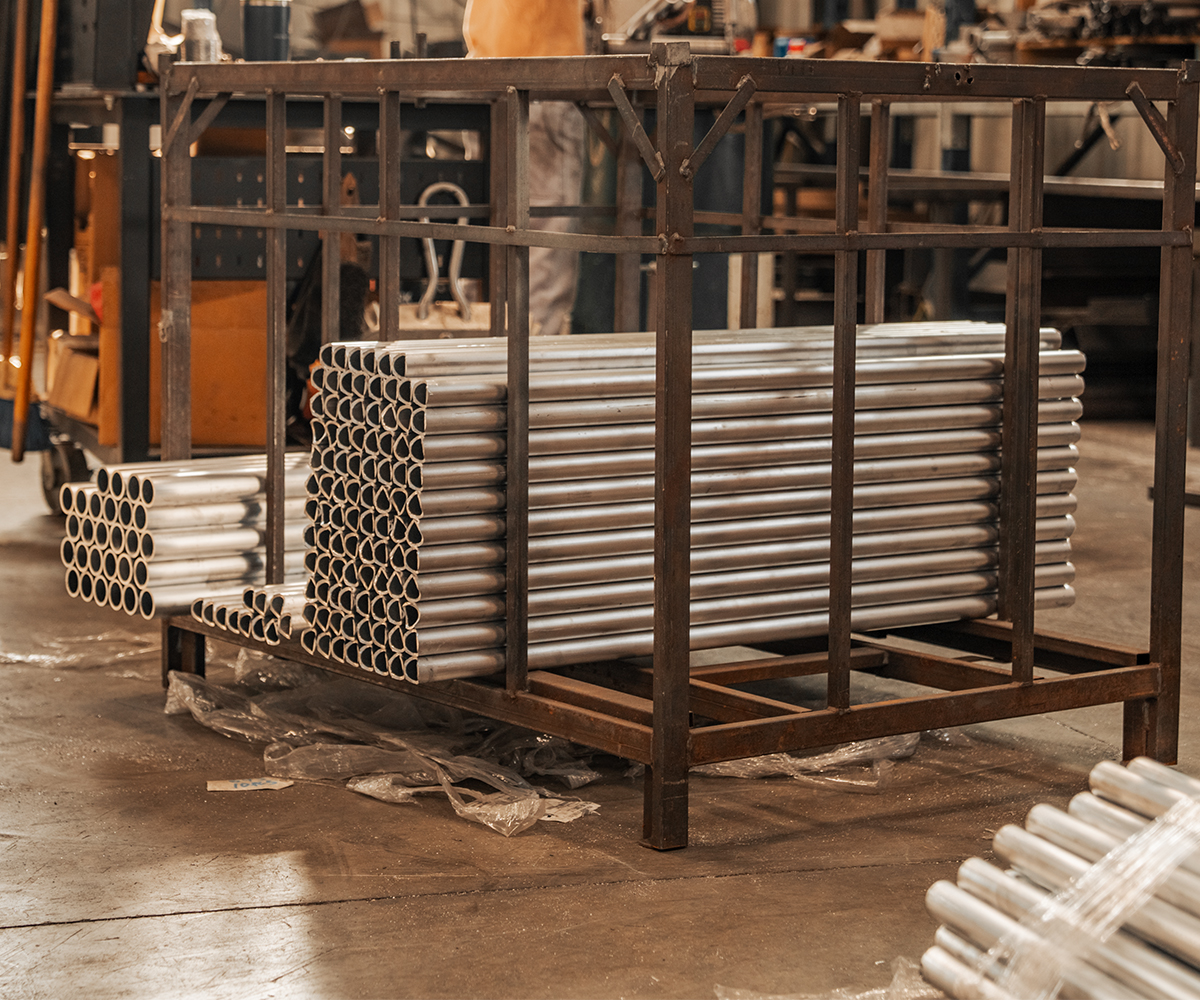
Hot-dip galvanizing is the process of coating iron or steel with a layer of zinc by immersing the metal in a bath of molten zinc at around 450°C.
Most people think of coating like painting a fence; you’re just adding a protective layer on top. If that paint chips, the metal underneath starts rusting almost immediately. Galvanizing doesn’t work that way. When that steel hits the molten zinc, a chemical reaction happens. The two metals fuse, forming a series of zinc-iron alloy layers.
Here’s how it works.
- The steel gets a three-part chemical scrub (degreasing, acid cleaning, and fluxing) to strip away every speck of dirt and oxide, because if the metal isn’t clean, the zinc simply won’t stick.
- The clean steel is dunked into an 830°F molten zinc bath, where it triggers a metallurgical reaction that fuses the metals together into a series of rock-hard, rust-proof layers.
- Since zinc refuses to bond with dirty steel, a quick visual inspection immediately reveals any flaws, followed by a magnetic gauge test to ensure the coating is thick enough to handle years of barn life.
Why Equine Environments Are So Hard on Equipment
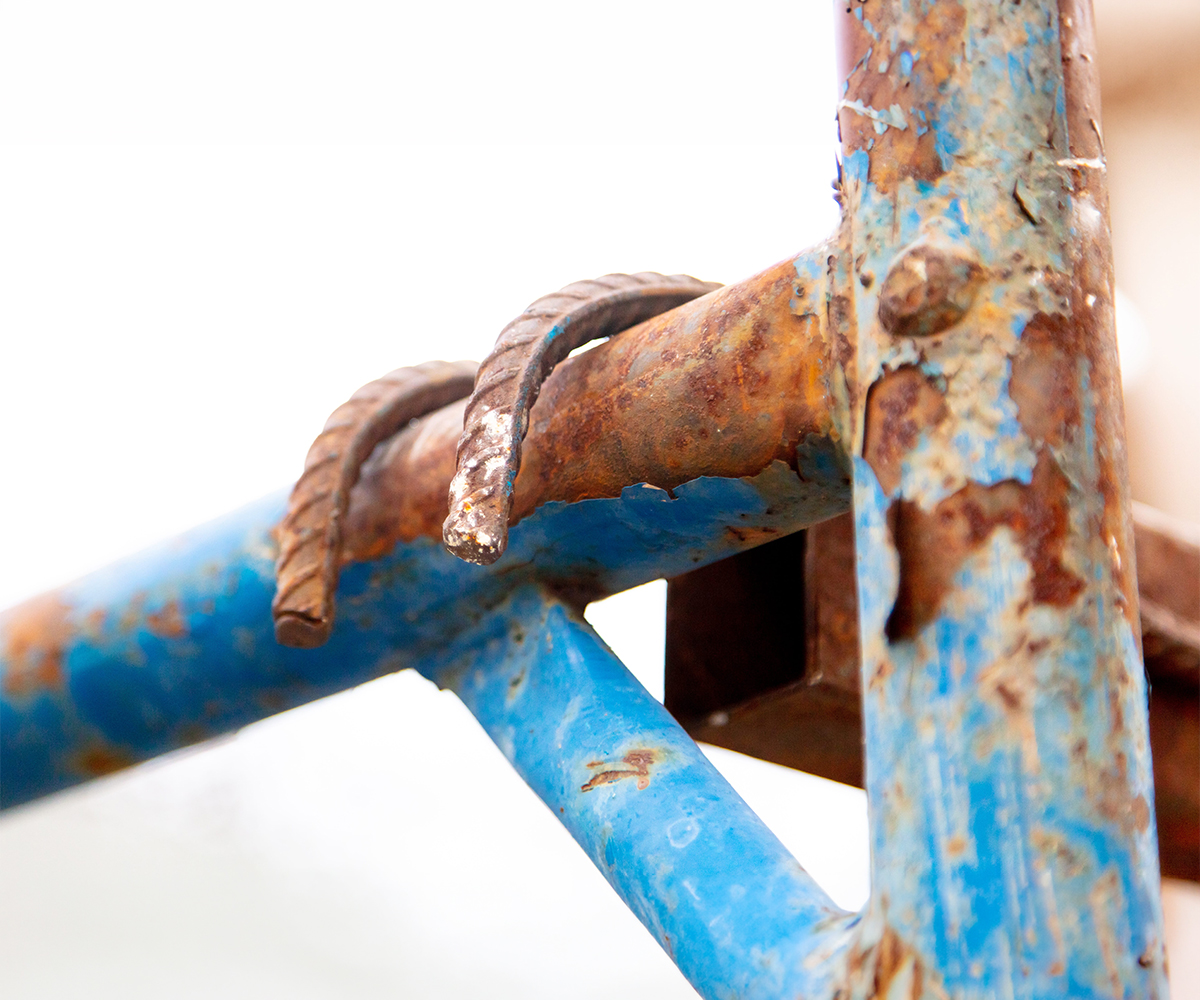
If you set out to design the perfect place to ruin metal, you’d end up with something that looks a lot like a horse stable. Constant exposure to moisture, dirt, and other elements eats away at metal. Here’s why your average rust-resistant paint doesn’t stand a chance:
- A harsh chemical environment. Between wash-stall spray, high humidity, and the ammonia-rich aroma of horse urine, your equipment is basically sitting in a corrosive environment. Ammonia, in particular, eats through standard coatings quickly.
- Constant heating and cooling. Barns aren’t climate-controlled. Metal expands in the summer heat and shrinks in the winter chill. This constant movement causes paint and powder coatings to develop microscopic cracks, allowing moisture to seep in and rot the steel from the inside out.
- Heavy impact from horses. Whether it’s a frustrated kick against a gate or a bored gelding using a hay feeder as a chew toy, horses create chips and scratches. In a standard setup, one chip is the “beginning of the end,” but with hot-dip galvanizing, the metal heals on its own.
Key Benefits of Hot Dip Galvanized Horse Stalls and Equipment
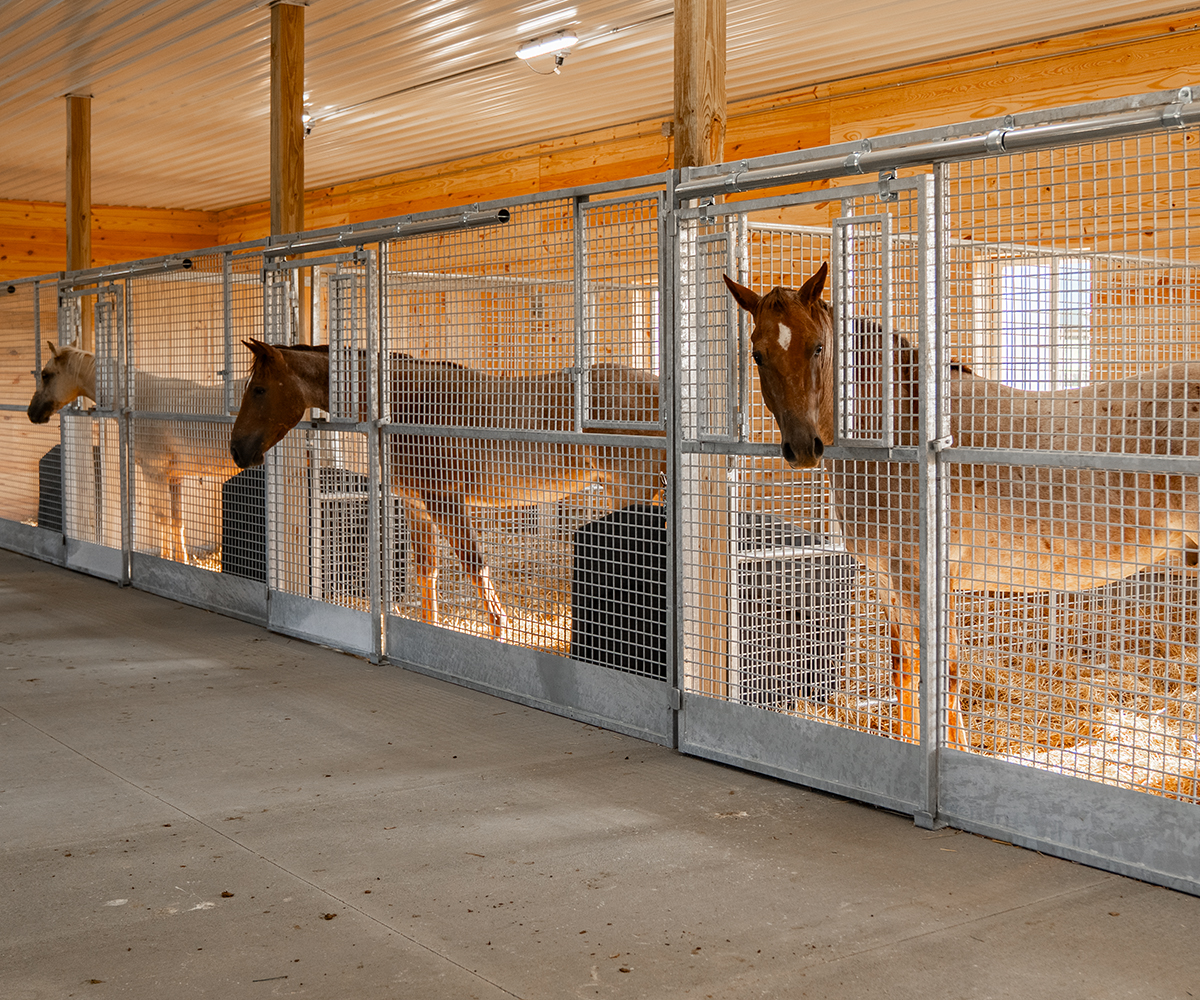
Hot-dip galvanizing helps your horse equipment last longer and handle the daily wear and tear of the barn. Listed below are some key benefits.
Superior Corrosion Resistance
Hot-dip galvanizing gives you a dual-layered defense. First, zinc acts as a physical barrier, preventing ammonia and moisture from penetrating. Second, it provides sacrificial protection.
The American Galvanizers Association highlights, “The cathodic protection offered by zinc means the galvanized coating sacrifices itself to protect the underlying base steel from corrosion.” If a horse manages to scratch the surface, the surrounding zinc chemically reacts to seal the wound.
Long-Term Durability
Standard painted stalls are a countdown to the next replacement, but galvanized equipment is measured in decades (not years). While paint starts flaking the moment a hoof clips it, this metallurgical bond stays put.
Low Maintenance
Because galvanizing doesn’t peel, flake, or blister, there’s zero need for those annoying seasonal touch-ups. Zinc coatings on galvanized steel corrode at roughly 1/30th the rate of unprotected steel, according to the American Galvanizers Association. You save a fortune on labor and materials, and more importantly, you stop wasting your weekends tackling orange rust spots.
Full Coverage Protection
Unlike spray paint, which can miss the inside of tubes or the tight crevices of a weld, galvanizing coats every square millimeter (inside and out). This prevents hidden rot, where equipment looks fine on the outside but is actually rusting into a hollow shell from within.
Cost Efficiency Over Time
The sticker price for galvanized gear is higher upfront. But when you factor in that you won’t be repainting it every two years or replacing the entire unit in five, the math flips in your favor. Higher initial quality results in the lowest possible lifetime cost per year.
Galvanized vs Powder Coated Stalls: What’s the Difference?
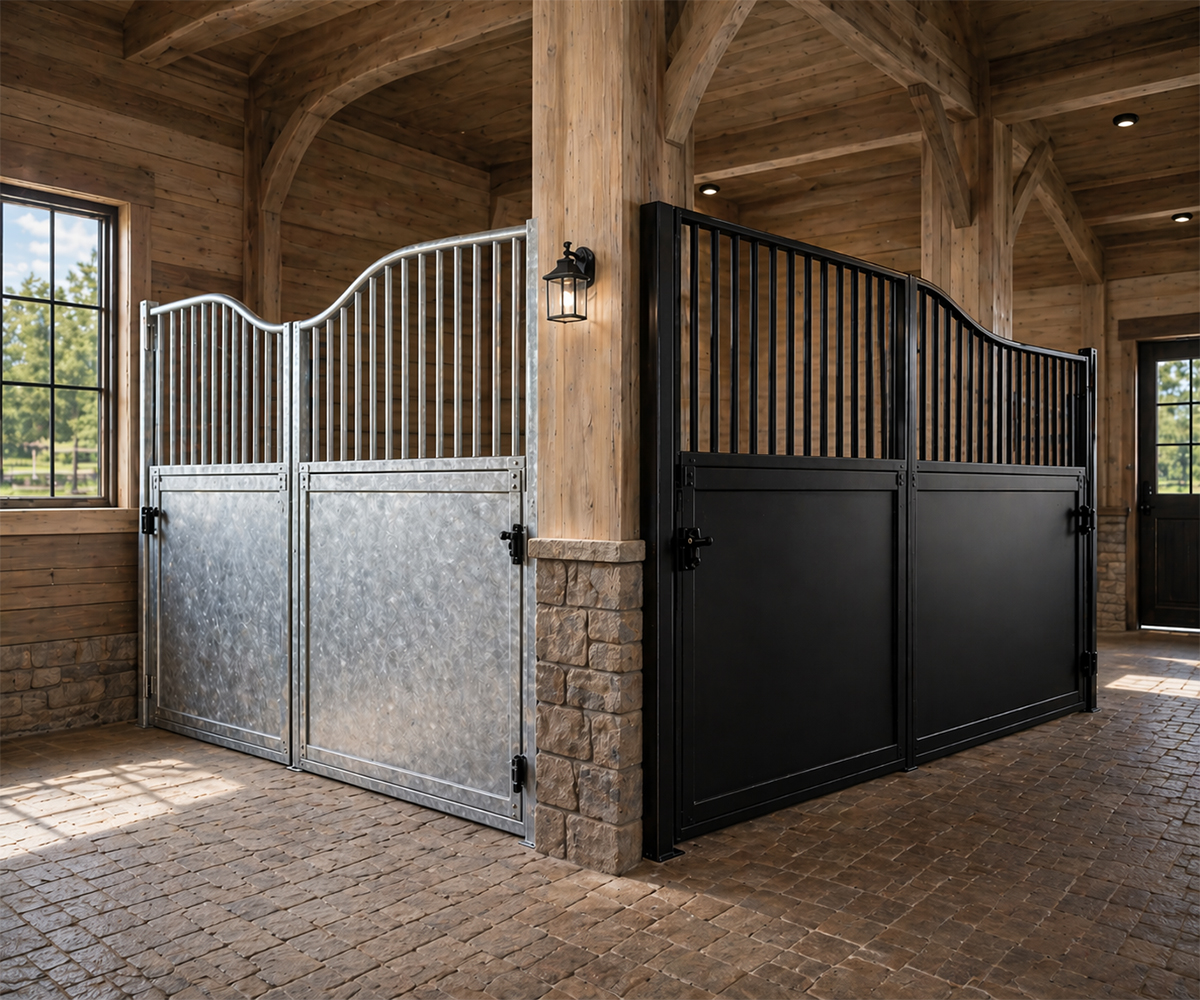
Not all coatings are created equal, and when it comes to horse stalls, the difference really shows over time. Powder coating might look polished, but hot dip galvanizing is the one that keeps your metal working hard year after year. Let’s break down how they work.
Powder Coating Overview
A dry plastic powder is sprayed onto the steel electrostatically and then melted in an oven to create a smooth, uniform finish. It’s why those fancy black stalls look so sleek on day one.
Where Powder Coating Falls Short
The problem? It’s just a skin. Horses have teeth and hooves, and once they chip that skin, the game is over. Because there’s no chemical bond to the metal, moisture crawls under the edges of the chip and starts rusting the steel where you can’t see it.
It doesn’t self-heal; it just bubbles and peels, leaving you with a maintenance nightmare in high-moisture barns.
Side-by-Side Comparison of Galvanized vs Powder Coated Stalls
| Feature | Hot Dip Galvanized Horse Stalls | Powder Coated |
| Corrosion Resistance | Excellent | Decent, until the first scratch hits |
| Scratch Protection | Self-protecting | Moisture gets under the skin and peels it |
| Lifespan | Decades | Years |
| Maintenance | Minimal | Requires continuous upkeep |
| Coverage | Inside + outside | Surface only |
Ideal Applications for Galvanized Equine Equipment
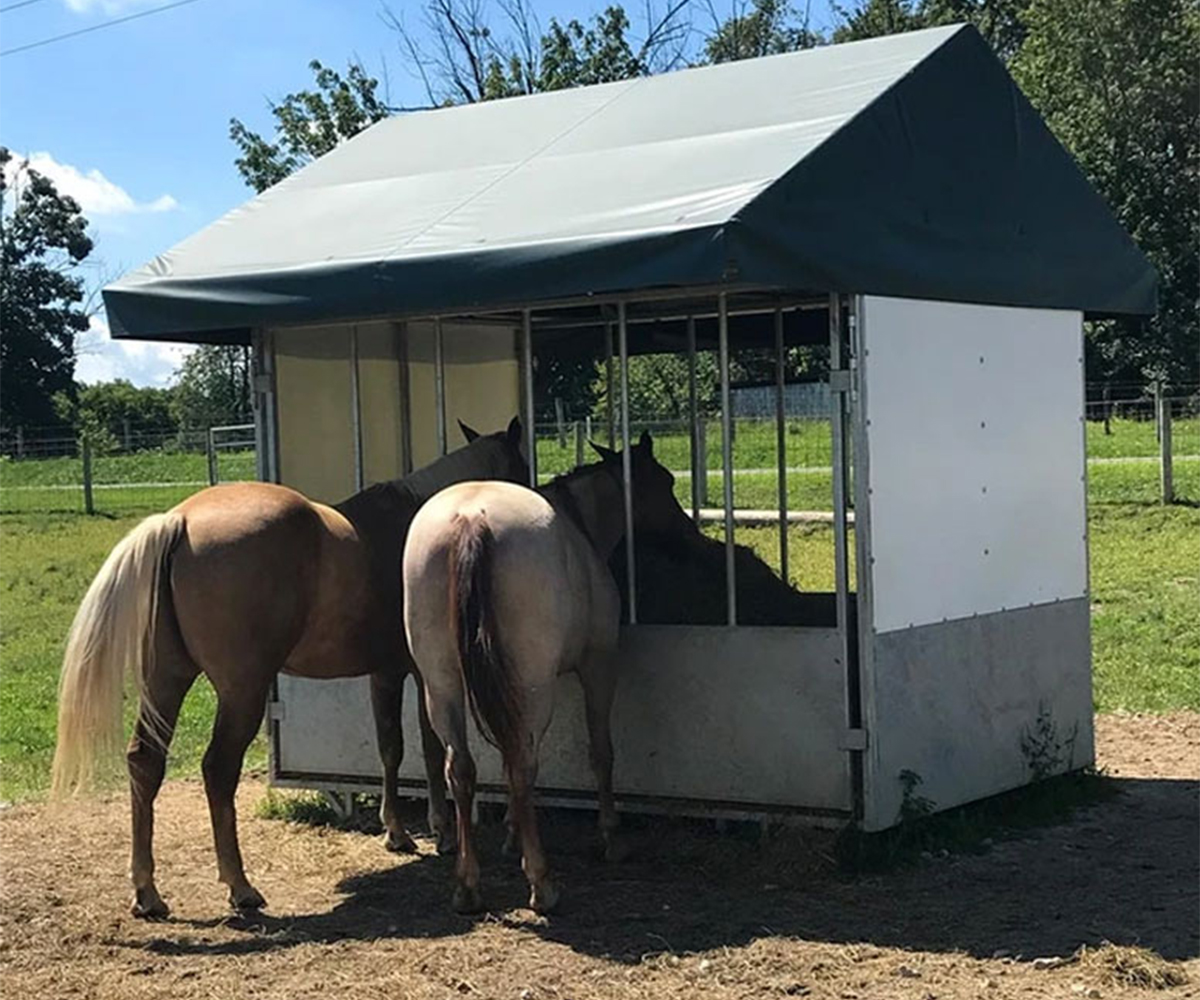
Anywhere a horse eats, sleeps, or tries to escape needs this level of protection.
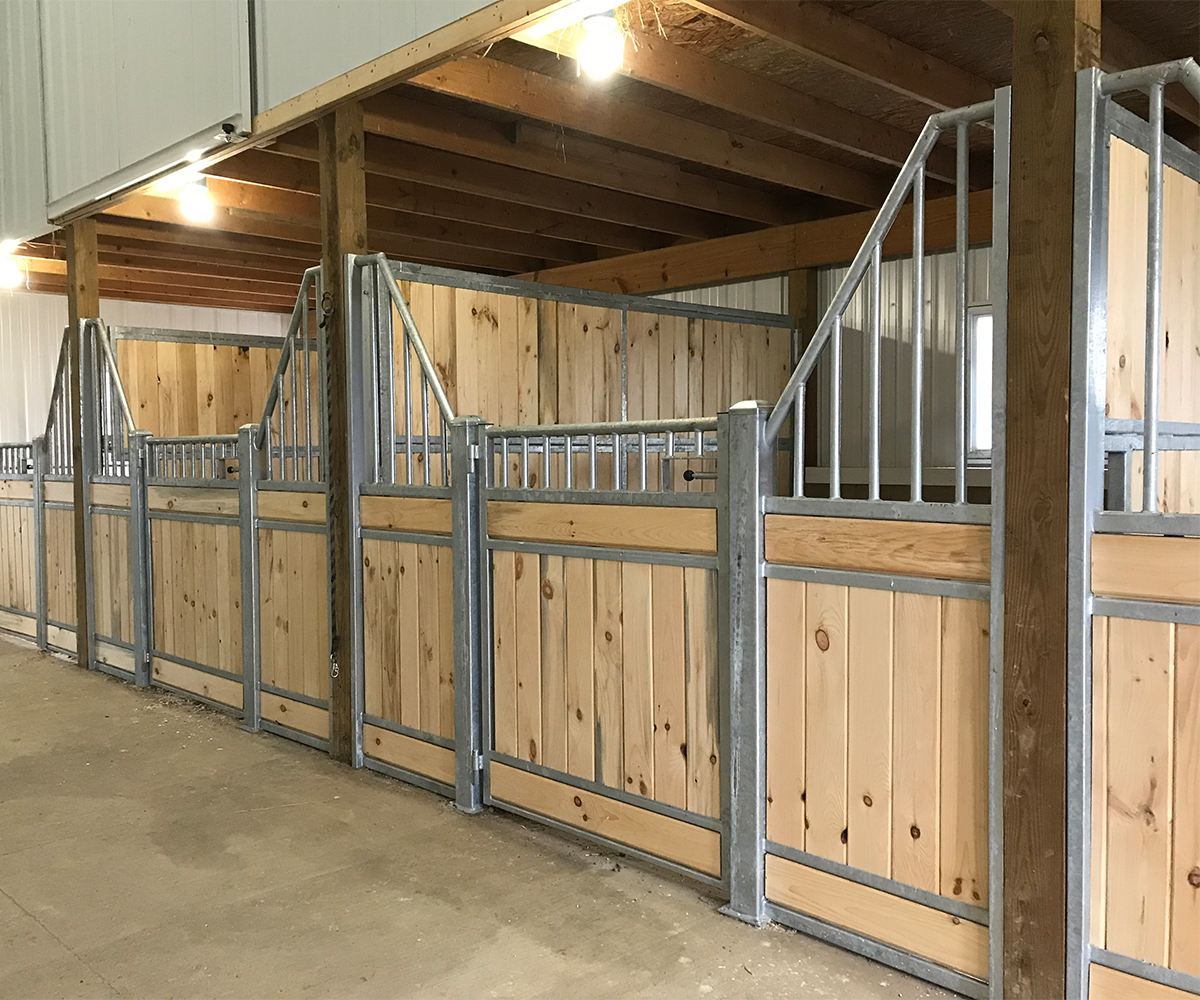
- Horse stalls. Stall tracks and grills are the ground zero for corrosion. Due to the constant humidity of a closed barn and the ammonia from bedding, standard steel deteriorates fast. Galvanized stalls withstand these harsh conditions without flaking into your horse’s hay. In fact, industry data shows that galvanized steel can remain protective for 70-90+ years before any maintenance is needed.
- Gates and fencing. Outdoor gates live a hard life. They’re pelted by rain, buried in snow, and slammed by 1,200 pounds of muscle. Because galvanizing protects the inside of the gate tubes, you don’t have to worry about them rusting from the inside out and snapping at the hinges.
- Hay feeders. Feeders are constantly exposed to saliva and wet forage. Since horses tend to scrape their teeth against the metal while getting every last bit of hay, you need a surface that won’t chip off and end up in their digestive tract.
- Outdoor paddock equipment. From water trough stands to hitching posts, anything sitting in the dirt or mud is a target for rot. Hot-dip galvanizing is the only thing that can sit in a soggy paddock for ten years and still look like you bought it last Tuesday.
- High-contact areas. Think about wash racks, stocks, or any area where you’re spraying water daily. If it’s repeatedly getting wet and drying, the paint is going to bubble. Galvanized steel handles it effortlessly.
How CRA Welding Uses Hot-Dip Galvanizing
At CRA Welding, we know that a pretty coat of paint doesn’t mean much when it starts bubbling six months into a humid summer. That’s why we’ve leaned so hard into hot-dip galvanizing; it’s the only one that stands up to the reality of a working barn.
When we design our feeders and gates, we’re thinking about the worst-case scenario – the ammonia, the constant wash-downs, and the daily impact of active horses.
By choosing the big dip process, we’re ensuring that our equipment is protected from the inside out. We focus on structural integrity and longevity over whatever the latest aesthetic trend is because we believe a gate should be a one-and-done purchase.
Final Thoughts: Invest Once, Not Repeatedly
We often spend hours researching the cleanest hay or the most supportive boots for our horses, but when it comes to the metal that holds it all together, we often look for the lowest price tag.
If you want to stop the cycle of dragging rusted scrap to the perimeter of your property every few years, you have to change your gear.
Hot-dip galvanizing is a commitment to long-term reliability. It’s the peace of mind that comes from knowing your stalls, feeders, and gates are chemically fused with a layer that resists corrosion.
When you think beyond that initial upfront cost and look at the next decade (or three) of barn life, the choice becomes pretty simple. Invest in quality hot-dip galvanizing once, so maintenance is one less thing to worry about.
Ready to protect your barn for decades? Get in touch now to request a free quote and see how hot-dip galvanized horse stalls can save you time and money over the years!